7 min read
Tag Young Blackcurrant Canes Before You Prune the Bush
Use a small record of stem ages to decide which old wood to renew and which branches should carry the next crop.
On this page
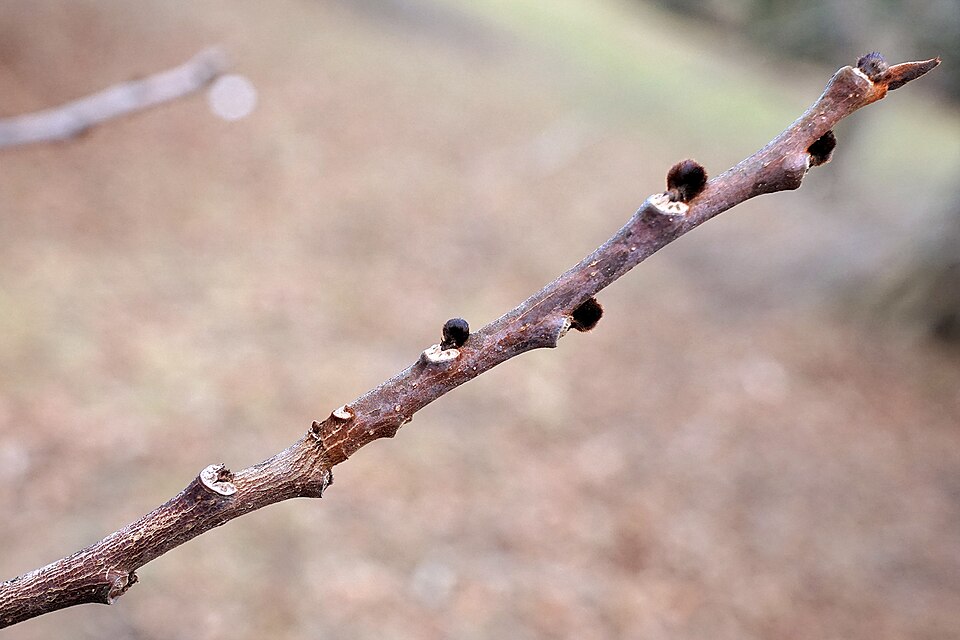
On a bare blackcurrant bush in winter, several stems can look equally old. One bends toward the path and another has bark dark enough to look like the obvious branch to remove. A few may have been new only last spring, and taking those would remove wood you want for future fruit. Give yourself a reference while the new canes are still easy to recognize. A tag or a simple drawing for each growing season can make dormant pruning clearer without requiring a label on every twig. It also gives you an answer when a branch seems especially productive but you cannot remember when it first appeared.
Blackcurrant is Ribes nigrum. Check local requirements for buying, transporting and planting Ribes before ordering, since rules vary and blackcurrants can host white pine blister rust. A locally appropriate resistant variety may be useful where cultivation is permitted and local guidance recommends it. Resistance does not by itself determine whether a plant is allowed. For this guide use a suitable bush-form plant. Young newly planted stock and standard-trained blackcurrants have their own instructions. The dormant renewal described here is for an established bush that makes several stems from near the base.
Leave an opening you can reach in winter
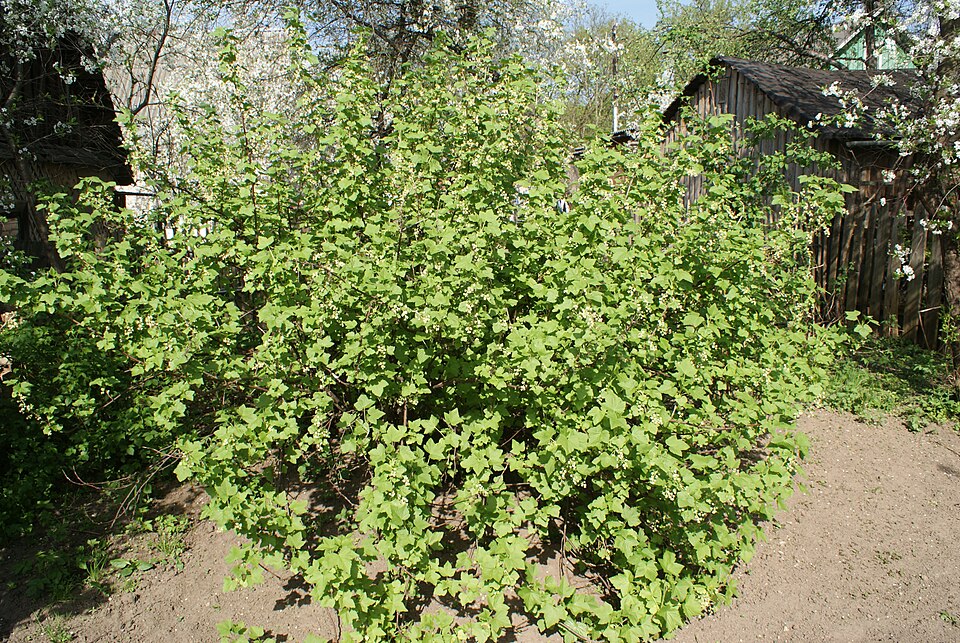
Choose sun and good drainage with regular moisture available. Some shade may be workable, but a sunny suitable location generally gives more fruit. Look at the variety's likely height and width. Many garden forms can reach about one and a half meters across or high. Leave a route to see the base when the plant is bare and enough room to pick from the outer branches in summer. A close fence can support a convenient narrow view of the garden while making the far stems much harder to inspect once the shrub has filled out.
Give a young planting time to root and grow before judging its mature framework. Use nursery and local advice for planting depth and initial pruning, appropriate to the stock you received. A young bare-root plant may be handled differently from an established bush you have moved. Settle the soil around the roots with water and check moisture while it grows. Keep weeds clear and drainage open. If several new stems lean toward the only open light, look at their position before deciding that the plant automatically needs a heavier dormant pruning.
Make a simple drawing of the base from the part of the path you use. Put a fixed feature such as a stone or a nearby post on the drawing. Mark the positions of a few strong stems and preserve the original variety tag. Some gardeners use loose temporary markers on examples, while others identify positions from the drawing. Keep any marker open enough to avoid pressing on a growing cane. Replace or remove it when necessary. Avoid putting hard clips where you cannot see them during strong growth.
Record the first year a strong cane appears
Find healthy vigorous stems emerging low on the shrub during the growing season. Those are potential replacements. Note where they arise and distinguish them from a new side shoot on an older branch. A cultivar can form several useful young canes at once, and you do not need all of them. Mark a few good examples you can follow into the next winter. Later, those stems help you compare newer and older bark on the same bush. A dark branch on one variety might not have the same appearance on another.
At the first dormant inspection, look at the sturdy new canes again. Check their direction and room. Anything that crosses into the neighboring shrub or lies against the ground will be less convenient even if it is young. Keep enough vigorous growth within the outline and mark the problem stem for further observation. A replacement that is clear of traffic can still be productive even if its angle is outward. Give new stems room before trying to turn the bush into a symmetrical shape. The branch you saw best in summer may be the one easiest to see in the winter drawing too.
In the following growing year, add another set of marks for the canes you want to track. Observe the previously marked ones through flowering and fruiting where possible. Use visible fruit to compare which wood was useful on this cultivar. A couple of examples of each known age can guide the next dormant look. Keep the year with each mark so a tag does not end up on a younger branch that grew beside the original. If a marked branch was damaged or removed, cross it out on the sketch rather than guessing which surviving stems belonged to it.
Renew an established bush a little at a time
Blackcurrants commonly crop well on younger growth. Once the bush has a useful framework, inspect which older parts have become less productive or difficult to reach. In the RHS system an established bush can carry about six to ten upright stems and receive a winter cut that takes up to one third of the oldest ones. The useful number depends on vigor, training and local conditions. Begin with damaged, crossing or badly placed wood as appropriate. Preserve productive and replacement stems for the next growing season.
Trace an old stem back to its base before cutting. Work in good light with clean sharp tools, and cut close to the base as suitable for the structure. Avoid cutting a vigorous new cane entwined with that branch. Take the removed stem away and step back. See whether the first cut already opened room for several others. In an old or weak bush with few young replacements, reduce the scale of the work or seek local advice before trying broad renewal. Replacing four old stems with one new one can set back the size you were trying to maintain.
Check how the cut changed your access. One stem lying low across the only reachable edge may be a better choice to remove than an older branch that sits usefully at the back. Age works alongside the condition and placement of each stem. Label two uncut branches you want to observe in the next season. If fresh canes fill the gaps, keep the strongest well spaced ones rather than letting every new shoot cover the center again. An open edge helps with harvest as well as pruning.
Observe berry clusters before you take them all
Pick according to the cultivar and its harvest stage. Some types can produce a cluster with berries ripening fairly evenly, and it may be useful to harvest the cluster as a whole. Others color and mature over several visits. Look on both sides of each cluster. The part closer to the light can look different from fruit tucked behind a leaf. Work from the access you kept open and support stems gently while taking sound ripe fruit. Keep the main tags in place so a productive branch can be identified later.
Use clean containers and cool sound fruit appropriately after picking. Keep damaged berries apart. During the season, observe which marked stems were easy to pick from and which carried the best clusters. Record useful growth without assuming that only one age can fruit. The amount of light and the plant's water history can matter as much as age for a particular branch. Compare similar sections where practical. A note about an accessible productive branch is often more helpful than a numerical count of berries from the whole bush.
Look again after the longest fruiting clusters have come off. On the branches you plan to keep, check whether ripening was uniform or spread over several visits. That helps you describe the value of a cane more accurately than noting that it looked very productive at peak color. Where the crop was inconvenient to pick, make that an access note for winter rather than disturbing healthy leaves unnecessarily after harvest.
Use the next dormant visit to check the renewal
At the next pruning, set the marked diagram beside the bush and compare the known year groups. Look for one older unmarked stem similar to each reference. Look at thickness and bark as well as nearby fruiting growth. Trace the main stem so a recent branch on a mature cane is not mistaken for a young cane from the base. Add the likely age to the drawing only if it helps the decision. Keep uncertainty visible when it is hard to tell. You can wait for another season of evidence when a sound branch is still well placed.
If the youngest stems have been sparse, check light, moisture and overall vigor before removing several old ones. If the center filled quickly after the last cut, leave only as many strong replacements as you can give room. Renewal works when sound young wood comes along regularly and you have a route to collect the fruit it carries. A few accurate dates make it easier to see how the bush reached that condition and when the next cut will actually help.
Further reading: Royal Horticultural Society guide to blackcurrants.