7 min read
Measure the Winter Route for a Container Fig
Choose an early fruiting selection for a short season and note which branches you need to preserve before pruning.
On this page
A fig you intend to bring under cover in winter has to get there after the pot is full and the tree has a summer of new branches. Measure the path to shelter before buying the container. Look for tight corners, steps and a threshold. Check whether the space you have in mind stays suitably cool and protected through cold snaps. A good fig for a small cold-winter garden is one you can move safely and give enough sun to ripen fruit before you need to move it again. The right cultivar and the right carrying route are related choices.
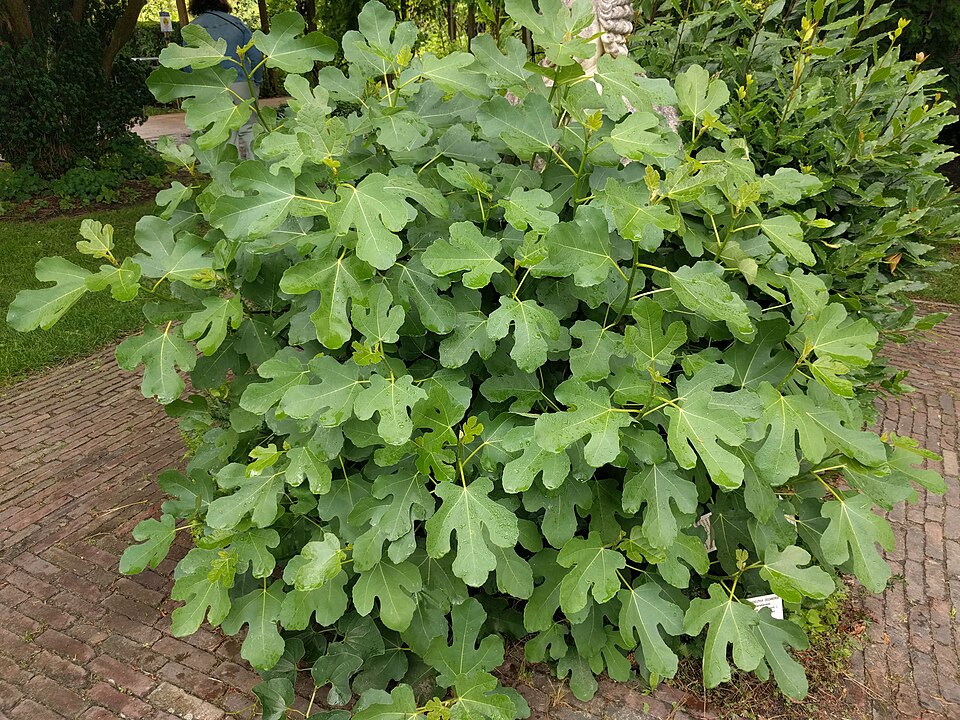
Common fig is Ficus carica, and fruiting habits differ among cultivars. Where the fig wasp is absent, choose a suitable common-type cultivar that can develop its crop without it. Ask a regional nursery or Extension service about early choices that can ripen in your growing season. Ask how wide the cultivar tends to branch in a pot before you set aside a place to keep the tree. A plant that develops a large canopy in a long warm season may be difficult to keep fruitful or movable in a colder garden.
Walk the route with a container in mind
Use a tape measure on the narrowest part of the route. Remember that leaves and branching wood extend beyond the rim. A pot that just clears a doorway can still require rotating the tree before it will pass. Choose a size that gives roots enough usable volume while allowing safe movement. University of Maryland Extension describes a minimum of about 15 US gallons, or 57 liters, for its mature container example. A younger plant may begin with less room and grow into a larger container. The weight of wet mix is important at every stage.
Choose a stable container with free drainage. If using a movable platform, use one designed for the load and make sure it can stay securely in place when the tree is outside. Test how it crosses the actual surface before putting the full pot on it. Small wheels can catch on a threshold or soft ground. Plan for help with heavy lifting. If the winter destination is accessible only down steps, use a different position or a genuinely suitable way to move the pot rather than assuming you will carry the whole tree alone.
Find and test the winter location in advance. It should be reliably sheltered and cool enough for the intended dormant storage method. Follow local guidance, since the temperatures a dormant fig can tolerate vary with cultivar, exposure and duration. A pot outside can expose roots to colder conditions than the same tree in the ground. Do not assume a garage or porch meets the requirement on the coldest nights simply because it feels sheltered on a warm day. Check it through cold days if this is your first year.
Give summer roots light, drainage and water
Place the tree in a sunny spot that warms well in the growing season. A slightly sheltered bright position can help where growing days are limited. Make sure you can reach the rim and the drainage outlet. A container set directly onto soil can send roots out through drainage holes, making a dormant move harder. Stable feet or another suitable arrangement can make those openings visible. Leave the pot far enough from a wall that branches can develop and the heat on the rim does not dry the mix unusually quickly.
Water thoroughly as the pot needs it and keep moisture fairly even while shoots and fruit develop. Check below the surface. A top crust may look dry while most of the inner pot is moist, or a bright hot side can dry faster than a sheltered edge. Leave drainage clear and avoid letting the medium remain wet all the time. A large rooted pot may use water quickly through warm weather. Water enough to wet the actual root zone and see that it drains, rather than adding a quick surface splash each time you walk past.
Look for the cultivar's fruiting habit at the same time. Mark one new shoot from the current season and a firm shoot carried from the previous year. The main crop develops on current-season growth. Some cultivars also carry an earlier breba crop on older wood from the previous season. The early crop can matter if autumn ripening is uncertain. Do not prune every old branch simply because young shoots are easier to train. Give yourself a season to see which wood carried fruit you could use.
Use fruit texture before choosing the picking date
Watch a few fruit on the current growth as they enlarge. Characteristics of ripe color vary among cultivars. A green-skinned fig may remain green when ripe. Softness and how the fruit hangs can be useful, along with its appearance for the cultivar. Let sound fruit finish on the tree. A hard fig collected before it is ready will not turn into the ripe fruit you wanted after picking. Handle ripe figs gently and keep sound fruit out of prolonged heat. Use appropriate washing and food storage practices.
Record the first ripe date for each group of fruit. Add a note about which branch held it and what the weather was doing. If fruit on the previous year's wood was ready much earlier than the current shoots, that is useful information when you plan pruning. If neither group regularly ripened in time, look at the local suitability of the cultivar and the summer warmth of the site. Removing more branches from a cold exposed tree is unlikely to give it the same season as an earlier selection in a better place.
Compare the first early fruit with the later crop in quantity and ease of picking. A few good early pieces may matter more to you than many fruit that are still hard when you prepare for winter. A lightly pruned tree with several reachable older branches can preserve options while you learn. Do not expect all mature figs to look or hang the same in direct sun and shade. Use a record of matched observations as the basis for keeping the best wood, and remove damaged or badly placed material as appropriate.
Fit the shape to the route before the first heavy move
Take a photograph of the whole tree from above or slightly to the side when the leaves are full. Identify the branches that spread farthest and the part of the pot that already has a clear handhold. Look at the route you marked before buying it. If the branches are growing through an adjacent support or fence, free them at an appropriate time while they are still easy to handle. A branch that carries the crop can be valuable even if it extends farther than you expected. A slightly wider turn in the route might preserve it.
After fruiting, consider which wood is sound and where future shoots can reach light. If you need to reduce the outline, work selectively according to the tree's habit and local guidance. Keep the sections you marked for any useful early crop. Leave enough space to handle the pot at the base rather than compressing the canopy during the move. Try the doorway in daylight when the surface is dry and you have help if the pot is heavy.
Check the dormant space for access as well. If you put several other containers next to the fig, keep one side open for inspecting the pot. A tree stored behind a row of heavy pots can become too difficult to check, precisely when weather conditions call for another look. A compact layout gives you room to make a gradual return to outdoor conditions when the next season starts.
Move the dormant tree and check it through winter
After leaf fall, use the sheltered position appropriate for your climate and cultivar. Check the pot, branches and route while you still have daylight and good footing. Move the container from its base rather than pulling the trunk or using a branch as a handle. Put it somewhere stable with enough room to inspect the pot through winter. A dormant plant needs much less water, but check the growing medium according to the conditions and avoid prolonged saturation or severe drying.
Inspect the older wood as conditions improve and let the climate guide when the pot returns outdoors. Gradually reintroduce it to stronger light and wind where needed. A root system that survives while branches die back can make new shoots, but those shoots will not necessarily ripen a useful crop in the same season. If the previous year's wood mattered for early fruit, protect it accordingly and watch for the parts that actually resume growth.
Review the route after the move. If the tree was healthy and moving it was the main difficulty, choose a simpler arrangement or a more manageable canopy instead of putting it in weaker light. If the pot traveled easily but the crop was consistently late, test a brighter warmer site or a regionally recommended early cultivar. Keep both observations. The successful fig is the one whose roots and useful branches you can protect and whose fruit has time to soften before the next move.
Further reading: University of Maryland Extension guide to growing figs.