7 min read
Harvest Kohlrabi While the Stem Still Cuts Cleanly
Make a small crop of kohlrabi and use a trial cut to judge tenderness instead of waiting for maximum size.
On this page
Take a knife to the first kohlrabi before you decide when the rest are ready. Cut through the middle and notice whether the blade crosses the same texture all the way through. Some varieties make a crisp, pale center while the outer layer is already thick enough to peel. If you wait much longer, a line of tough fibers may extend into the part you want to eat. One early cut tells you more about your own cultivar and growing conditions than the diameter of a specimen in a seed catalog.
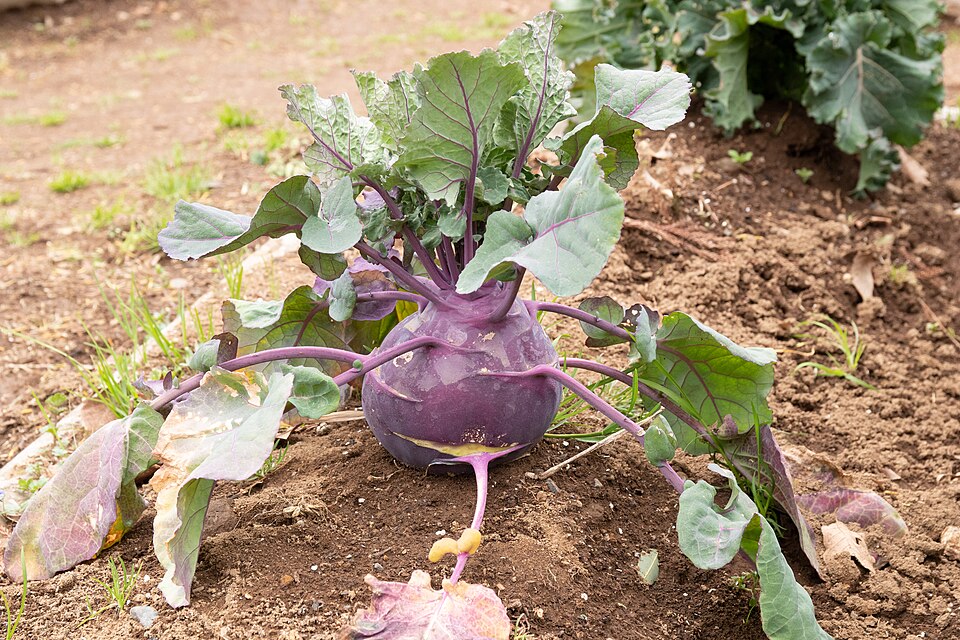
The swelling is part of the stem, visible above the ground. It carries leaf stalks at intervals around its surface and normally has roots continuing down below. Keep that shape in mind when you transplant. Burying the plant to hide every part of its bare stem is an understandable impulse when seedlings are leggy. The final crop is easier to examine if the growing point and swelling remain in the position where the plant naturally develops them. Give the seedlings good early light and choose a sowing date that keeps them growing steadily.
Choose the size of the crop before the size of the stem
Kohlrabi comes in green and purple forms. The color on the outside can help you see it in the bed, but it does not determine the size you should harvest. For a first planting, choose an ordinary early cultivar that is described as tender when small. A named variety selected for large stems can remain tender at a greater size, but it asks for space and time that a short trial may not have. Read the harvest size and spacing on the packet as a pair. They tell you both how many plants will fit and how many meals that planting might provide.
A six-plant row can be an adequate trial. Group it where you will pass while watering something else. Sow another small group once you have reason to believe the first one will succeed. In a cool, mild part of the year, successive sowings may spread the meal-sized stems over several weeks. Where the weather is likely to become very hot or very cold, the last sowing may grow at a different rate and reach the same usable stage later than an interval on the calendar suggests. Plan a series of inspections as well as a series of sowings.
Choose where you will use the first crop. Small stems are easy to sample and peel, while a larger, tender cultivar can be useful for cooking in batches. If you expect to cut a plant for raw slices, smooth texture matters more than maximum weight. For a family that has never tried kohlrabi, one small row avoids a pile of vegetables whose flavor or texture is still unfamiliar. Leave an easy space to grow something else once the first round is cut.
Set seedlings up for an uninterrupted start
Choose a temperate period suitable for the cultivar. Prolonged cold can encourage some plants to flower prematurely, particularly after early sowing, and hot dry weather can leave stems woody. Starting early in modules under cover is an option if the conditions outside are too cold. Direct sowing works when the bed and weather are suitable. Use the depth on the packet, water gently and mark the row. Thin while seedlings are small enough that the remaining roots have room to grow before the stems enlarge.
Look for direct light in the bed and workable, draining soil. Kohlrabi is related to other brassicas, and the location matters if there is a history of pests or disease in that group. Follow local crop rotation advice and keep track of repeated problems in your garden. If you use appropriately fitted insect netting against pests, install it early and keep it clear of the leaves while the plants grow. Inspect underneath from time to time because weeds and pests can still be present. The cover should be easy to lift for watering or checking the stems.
For modules, set an intact plug into moist soil and firm around it gently. Give it the amount of room recommended for the harvest size. An early cultivar may be grown more closely for small stems than one chosen for a prolonged season and larger heads. Place container crops in a pot with enough mix to hold moisture through an ordinary warm day. Sow only the number of plants you can space reasonably. A large container can still be a small root zone when half a dozen vigorous plants share it.
Keep water steady while the stem begins to swell
Check the soil below the surface on a warm afternoon. A stem may stay crisp and expand steadily when the soil is evenly moist. During a dry spell, shallow sprinkling may temporarily darken the soil without giving the roots much water. Apply water slowly and check what reached the root zone. After rain, wait until you know whether the bed actually needs another watering. A pot subject to reflected heat dries differently from the same soil in a sheltered bed. Keep the plant in a position you can check without reaching past other containers.
Weed around the plants while they are still small. As the stems start to round out, hand weed close to the row so you can see what you are touching. Leave healthy leaves in place during the trial. Each fan of foliage supports growth, and stripping leaves early makes the plant harder to compare with a well-grown specimen of the same cultivar. Move aside a damaged leaf if it blocks your view of the swelling, then look for the cause before removing healthy foliage around it.
Outdoor crops sometimes grow unevenly along a short row. If every plant at one end falls behind, compare light, space and moisture at both ends. If one center looks tall and pointed while the rest are enlarging round stems, look for a flower stalk and check the conditions that plant experienced. Use those observations to decide whether later sowings need a different window or a different place. Pushing the weaker plants with heavy feeding is unlikely to undo early cold or repeated interruptions in moisture.
Cut and compare two stages
When the first stem reaches the smaller end of the cultivar's usual harvest range, hold the leaves and cut through the stem below the enlarged part. Trim the leaves so you can see the shape. Peel away the tougher outer layer as needed and cut across the middle. A tender piece should slice without pulling long strings behind the knife. The texture can differ near the base and toward the top. Try a sample from each before you decide to leave the others much longer.
Set a brief interval for your next inspection. A row growing rapidly after mild rain may change substantially in less than a week. Keep plants only as long as they are likely to improve in the way you want. If a second cutting is larger but tougher, choose the earlier size for the rest. If it is still crisp and the plants have adequate water, you can allow slightly more time on the next batch. The trial works best when you compare similar plants, so label varieties that share the same bed.
Keep harvested pieces clean and cool and separate those that have split or been damaged. A minor blemish and deep soft decay call for different handling. Follow normal produce washing and storage practices before use. Check your records before growing a larger planting. If you had enough stems and liked the texture best at a small size, you can repeat a compact row with the spacing suited to that harvest. If you want larger stems, try a cultivar intended to reach that stage rather than extending an ordinary early type well past its best point.
For a boundary check, cut a stem that has just passed the recommended size only if you have enough others for the meal. Look at its cut face near the base, where fibrous material may stand out under good light. Record what you trimmed away as well as what you kept. That tells you whether the extra growing time produced any additional food worth using.
Make each later sowing solve one problem
A slow first sowing may have gone out too early, or it may have shared the bed with neighboring plants that grew faster. Think about whether there is a simple change you can compare next time. Move the planting a little away from shade, choose a milder window or give the stems more room. Keep the other parts of the method similar until you see what the change did. A short row makes it possible to act on those observations instead of waiting for every plant to reach the same size.
Keep the label through the final harvest and write down the approximate width of the tender sample. Next season you can visit the row when the first plant approaches that width. The knife still gets the final say. A small stem that cuts evenly gives you a clear reason to pick the neighbors before they surprise you.
Further reading: Royal Horticultural Society guide to kohlrabi.