7 min read
Choose Radicchio by the Head You Want to Cut
Match a heading chicory to your growing season and check its heart before judging it by color alone.
On this page
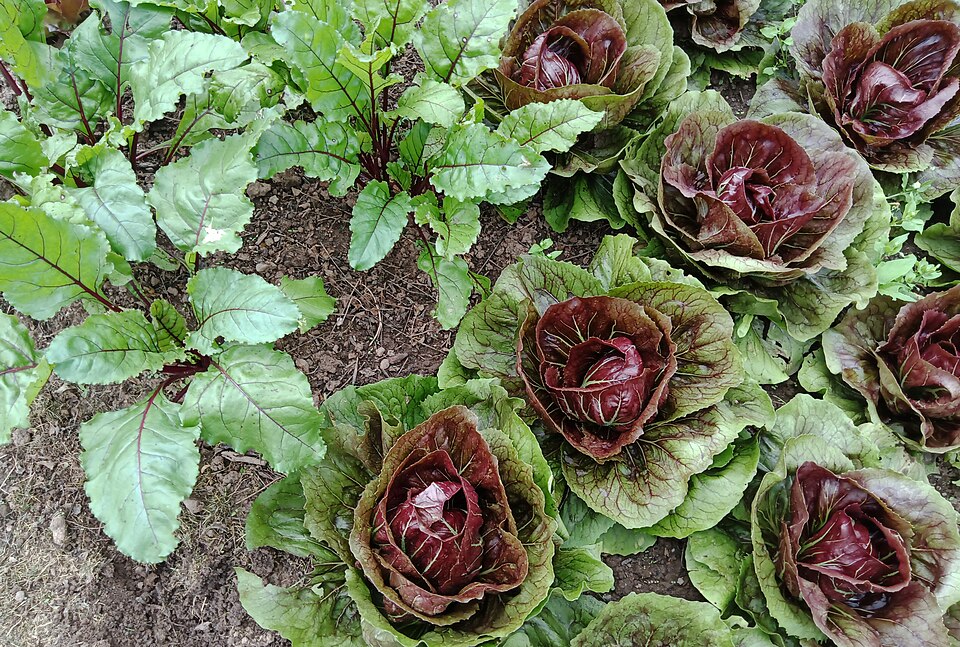
A radicchio row can look ready from the path and still consist of little more than loose outer leaves. The color you want may be visible, especially after cool nights. Reach down and gently feel the center. A good heading variety gradually makes a denser heart inside the open leaves. The difference matters if you want wedges for a meal or compact heads to bring indoors. A few sound outer leaves can be used earlier, but taking them is a different harvest from waiting for the plant to close.
Radicchio is a heading form of chicory. The seed catalog often shows its deep red or patterned heart in a tight portrait. That picture tells you little about the green outer leaves in a summer bed or the date when the heart becomes firm. Use the variety name and its growing requirements to plan for those stages. Start with a cultivar intended to head in the garden without a separate forcing step. Keep one plant for observations so you can make harvest decisions with a consistent reference.
Use the variety name to plan the size and shape
Round heading types often sold as Chioggia or Palla Rossa make compact heads when conditions suit them. A Treviso type can be elongated, and many cultivars or selections differ in how they are finished. Some chicories are bred for forcing, which involves a separate period of growth after lifting roots. Read the description to confirm you are buying the type you want to cut straight from the bed. The catalog photograph may show a head with many outer leaves removed. Its dimensions do not tell you how much space the whole living plant will occupy.
Choose a seed packet with guidance for your growing region or a climate like yours. The expected season, tendency to head and response to cold matter for a first crop. A cultivar that colors well during cool weather is useful if you have a mild autumn. In a short season, choose one that can form a useful head before severe weather. Avoid committing the whole plot until you have seen how it performs. Two short rows, labeled clearly, are enough to compare shapes without creating more salad than you can use.
Before ordering, think about serving size. A round head may be a convenient shape for cutting into wedges, while an upright type can provide longer leaves. There is nothing wrong with an irregular shape if you mostly shred it. Choose based on the harvest you actually want. Bringing the intended result into the seed decision reduces the urge to leave a ready plant in the ground merely because it has not reached the size in the photograph.
Make the sowing window fit the bed
In a temperate garden, many summer sowings produce heads in cooler conditions later in the year. Check the cultivar's sowing advice and estimate backward from the end of your likely harvest window, allowing time for growth to slow in shorter days. Cold early conditions or a disturbance during growth can lead to premature flowering in susceptible plants. Long dry spells are also hard on young transplants. A local calendar and the weather you can actually manage are better starting points than selecting the earliest date printed in a general guide.
Prepare a sunny bed with workable soil that holds moisture and drains freely. Clear weeds before making the rows. You can sow directly and thin the seedlings, or start individual modules to take advantage of a bed that will become available in a few weeks. Avoid holding plants in small cells for longer than necessary. If transplanting, harden them off, water the plugs beforehand and handle them by the root ball or leaves. Keep the crown at a sensible height and water into the surrounding soil. Set a tag beside each batch with its date and cultivar.
When sowing directly, mark the row and keep the shallow seed zone from drying while seedlings establish. Thin to the supplier's recommended spacing for heads. If the plants are crowded as their leaves overlap, the row becomes harder to inspect and takes longer to dry after rain. A staggered arrangement can work in a wide bed, provided you can still reach all the plants. Planting additional seedlings in a spare edge does little good if you cannot distinguish or reach them once they grow.
Observe a whole plant before removing leaves
Learn the ordinary sequence from one end of the row. The young plant opens outward. Later, inner leaves start to stand and fold into a heart. Outer leaves can remain broad and green even when the heart beneath them is already showing prominent veins and a stronger color. Avoid using the shade of the outside leaves as the only test. Cool growing conditions can bring out strong red tones in many selections, but timing and color depend on the cultivar. A pink edge is no promise that the interior has the firmness you want.
Water to keep the active root zone reasonably even. Check the soil near the row and under the leaf canopy after dry afternoons. A mulch may slow moisture loss after seedlings are established. Keep it from packing against leaf bases. Inspect the lower leaves after persistent rain for slugs or damage. If the first several plants begin to send up narrow upright centers instead of forming compact hearts, cut a sample and check for a developing stalk. Study the sowing date, temperatures and any gaps in watering before deciding how to change the next planting.
You can leave one plant relatively undisturbed as a reference. Pick an outside leaf from a different plant if you want to taste the crop early. Compare the taste with the trimmed center when the first head is ready. Radicchio has characteristic bitterness, and its intensity can vary among selections and stages. A slightly smaller head may already have the texture you want. A bruised or yellow outer leaf is a cue to look inside before deciding to leave the entire plant for another week.
Make a first cut before the whole row is ready
Take a firm, reasonably filled head from a plant of average size. Hold the leaves and use a clean knife to cut just below the head. Lift it clear of the soil and trim damaged outer leaves. Slice through it indoors to see how far the edges have folded and how evenly the heart has filled. If the center feels dense with crisp leaves and no advancing flower stalk, it gives you a useful comparison for the neighbors. A very loose head can still give you edible leaves if they are sound. Record its stage to improve timing next time.
Harvest subsequent heads as they firm up, especially if heavy weather is coming. Dense leaves that are folded together can hide decay, so inspect a head that has stayed damp for several days or has softened near the base. Remove damage before storing sound portions and follow ordinary produce handling practices. Leave a small margin in the schedule. If you need a dependable supply for several meals, sow more than one short batch during an appropriate period rather than expecting a row of identical plants to hold indefinitely at its peak.
If a plant has not headed, check whether the cultivar or weather explains it and decide if there is time. Waiting can make sense when the center has just begun to fold and the crop still has a favorable forecast. An advancing flower stalk changes the decision. A plant that is producing marketable leaves now can be worth picking even if it will never produce a tight head. Make a separate note of those usable leaves so you remember what the planting provided as well as what you had originally intended to cut.
Keep the identification with a head that you bring indoors. Once the outer leaves are trimmed, a smaller round head from one batch may be difficult to distinguish from a different cultivar you are comparing.
Keep a record of the first firm heart
Write the date of the first firm sample on the row tag. Add the sowing date and whether the trial was direct or transplanted. If you grew round and upright types, compare the time each took as well as the amount left after trimming. A head that looks large in the bed can be surrounded by more discarded outer leaves than one that looks small. Its useful size in the kitchen is a better basis for planning the next row.
If you had an uneven crop, inspect both ends of the ground before beginning another sowing. A shaded strip, a place where irrigation barely reaches, or the part sheltered from frost can each give you different results on the same day. Use that variation when it helps you stagger the harvest. Move to a more even piece of ground when you want a short, dependable picking window. The point of learning to feel the head is that you can choose by what the plant has produced, at the time you intend to use it.
Further reading: Royal Horticultural Society guide to chicory and radicchio.